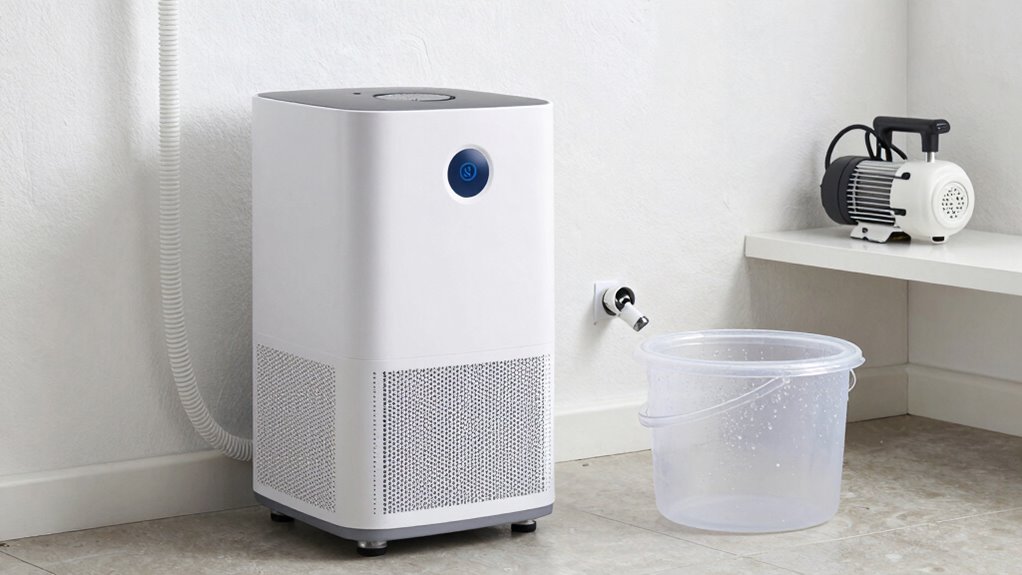
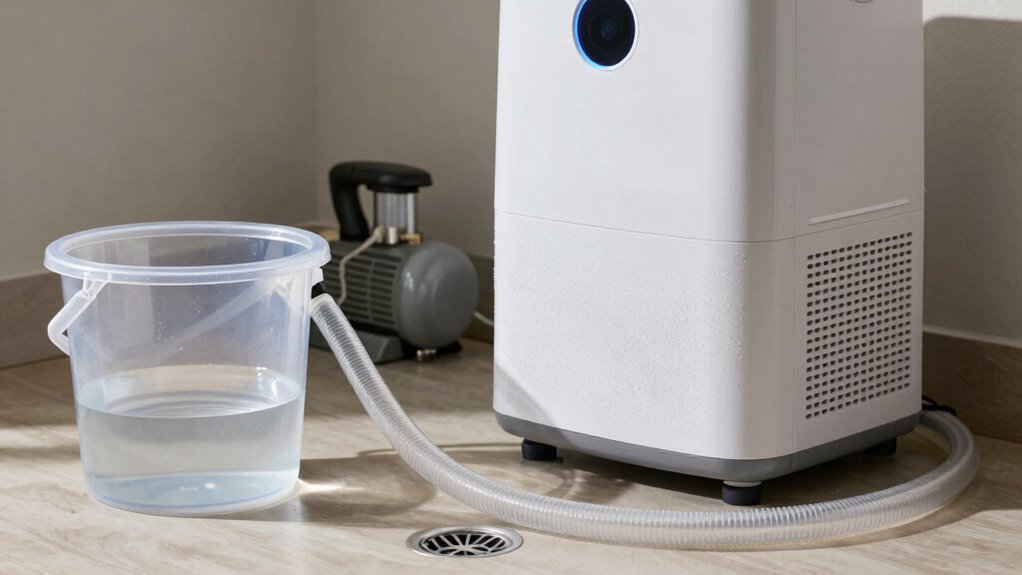
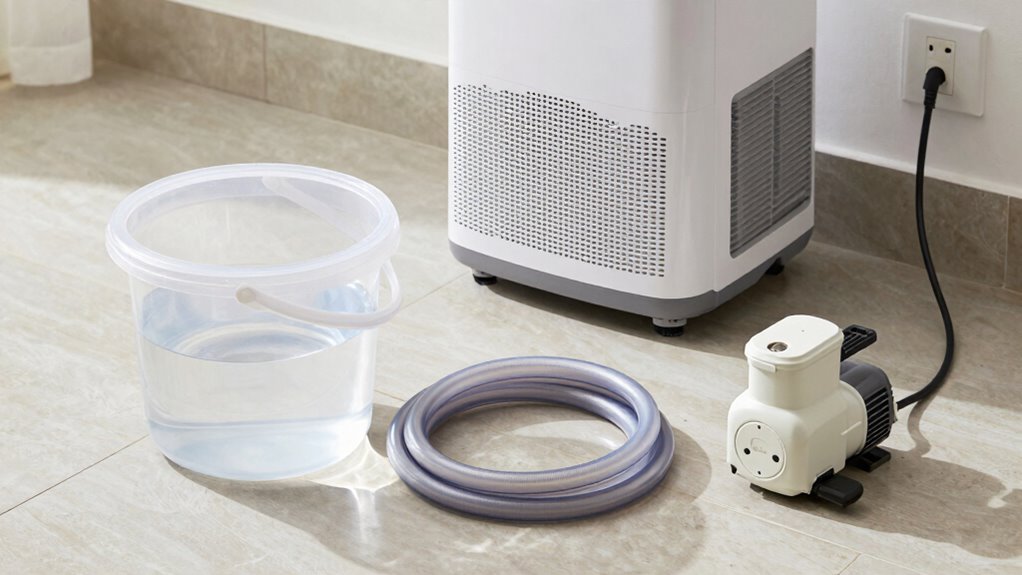
When choosing a dehumidifier drain, you can opt for a bucket, hose, or pump. Buckets are simple but need frequent emptying, hoses offer continuous drainage, and pumps can move water uphill or over long distances automatically. Each method has pros and cons related to convenience, cost, and maintenance. To make the best choice for your space and needs, explore the detailed options below to find what suits you best.
Key Takeaways
- Buckets require manual emptying but are simple and low-cost; hoses enable continuous drainage with minimal maintenance.
- Pumps are ideal for high or hard-to-reach places, preventing overflow and supporting automatic water removal.
- Proper installation, including secure connections and correct positioning, is essential for all drain types to prevent leaks and spills.
- Regular maintenance, such as cleaning hoses and checking fittings, extends system lifespan and prevents clogs or water damage.
- The choice depends on setup flexibility, budget, and convenience, with each option offering different levels of automation and effort.
Why Choosing the Right Dehumidifier Drain Matters
Choosing the right dehumidifier drain is vital because it directly affects how reliably your unit removes moisture. Proper drain safety ensures you prevent leaks, water damage, and electrical hazards. If your drain isn’t secure or appropriate for your setup, you risk flooding or mold growth. Climate considerations also play a role; in humid environments, a dependable drain method keeps your space dry without constant monitoring. Selecting the right drain type helps maintain continuous operation and reduces maintenance needs. An insecure or unsuitable drain can lead to unexpected water issues, compromising your home’s safety and comfort. So, understanding how different drain options suit your climate and safety needs is essential for effective and worry-free dehumidification. Additionally, considering the contrast ratio of your dehumidifier can influence its efficiency in different lighting conditions, ensuring optimal performance. Ensuring drain compatibility with your specific dehumidifier model can prevent future issues and enhance overall reliability. Furthermore, assessing the installation requirements of each drain type can help you choose the most convenient and secure option for your space. It’s also important to evaluate the drain capacity to match your dehumidifier’s moisture removal rate, preventing overflow or underperformance.
Key Factors to Consider When Picking a Drain Method
When choosing a drain method, you should think about how easy it is to install and whether it offers enough flexibility for your space. You’ll also want to contemplate ongoing maintenance and how much it might cost over time. These factors can help you select a solution that fits your needs and budget. Considering the essential oils that may be used in air or water treatment systems can also influence your choice, ensuring compatibility and safety over the lifespan of the dehumidifier.
Installation Ease and Flexibility
Installing a dehumidifier drain should be straightforward and adaptable to your space, so you can set it up without hassle. With a drain pipe, connecting your dehumidifier to a drainage point is usually simple and quick. Many models offer installation flexibility, allowing you to run the pipe discreetly along walls or ceilings to reach a drain outlet. If you prefer, some units are designed for direct hose attachment, making setup even easier. Pump systems add more flexibility by enabling you to drain uphill or over longer distances without worrying about gravity. Overall, the ease of installation varies depending on your chosen method, but most options are designed with user convenience in mind. This ensures you can maintain efficient drainage with minimal effort. Additionally, understanding installation flexibility can help you select the most suitable drainage method for your space, especially when considering the ease of maintenance involved. The right choice can also impact the long-term system durability and performance of your dehumidifier setup. When choosing a drain option, considering proper installation practices can prevent potential issues and extend the lifespan of your equipment. Proper planning also ensures that the drainage system remains reliable and trouble-free over time.
Maintenance and Cost
Maintaining your dehumidifier’s drainage system and managing costs are essential factors to contemplate when selecting a drain method. A bucket requires regular emptying, which can be inconvenient but involves no ongoing expenses. A hose offers low maintenance, with minimal cleaning needed, and is generally cost-effective upfront. A pump, though more expensive initially, can save you time and effort in the long run. When considering energy efficiency, pump systems may consume more power, but their automation can reduce overall operational costs. Additionally, choosing a proper drainage system can help prevent water damage and avoid costly repairs. Investing in a reliable drainage method can lead to long-term savings by preventing water damage and reducing maintenance needs. Additionally, understanding drainage system options can help you make a more informed choice tailored to your circumstances. Moreover, selecting an appropriate installation method ensures the drainage system functions effectively and minimizes potential issues. Ultimately, balancing upfront costs with ongoing maintenance and energy efficiency will help you choose the best drain method for your needs.
How Bucket Drains Work and When to Use Them
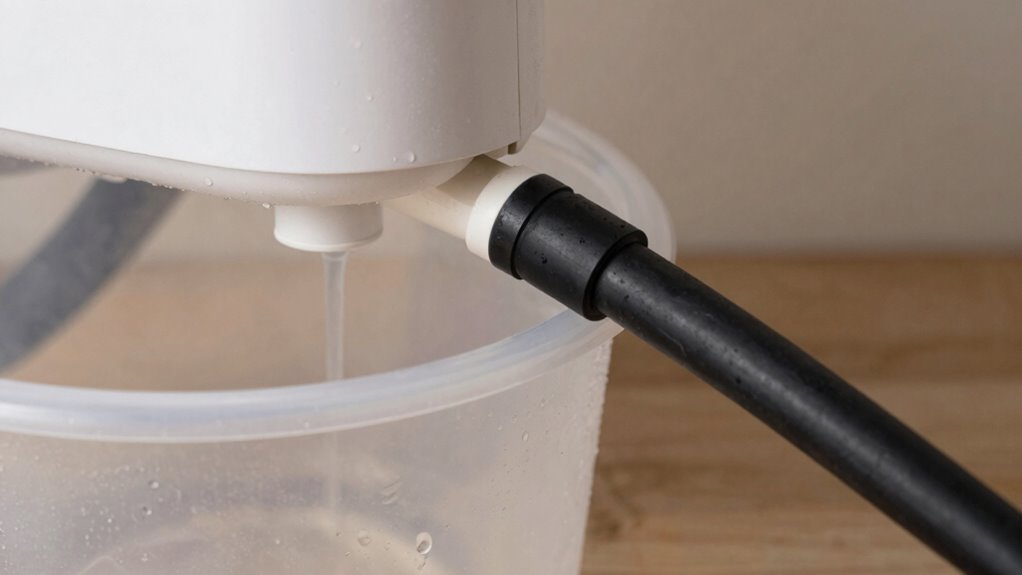
Bucket drains are simple and effective, but they require proper placement to prevent spills. You’ll need to regularly check and empty the bucket to keep your dehumidifier running smoothly. Understanding these factors will help you decide when a bucket drain is the best choice for your setup. Proper installation techniques can also enhance safety and efficiency. Additionally, ensuring the drainage area is level and stable can prevent accidental tipping or overflow. Regular maintenance of the drainage system is essential to avoid mold or water damage. Incorporating humidity management strategies can further extend the lifespan of your rugs in high-traffic areas, especially when considering the impact of cabling solutions on your ventilation setup.
Proper Placement Strategies
When setting up a dehumidifier with a drain bucket, proper placement is crucial to guarantee continuous operation and avoid water damage. Focus on placement precision to ensure the bucket is positioned securely and level, preventing leaks or spills. Choose a location near a drain or area easy to access for emptying, but keep in mind space considerations—avoid cramped corners that hinder removal or maintenance. Ensure the bucket is stable and on a flat surface to prevent tipping. Keep it away from heat sources, direct sunlight, or areas prone to water splashes. Proper placement not only maintains ideal humidity control but also minimizes risks of water damage or mold growth. Additionally, understanding the art and culture intersections related to environmental preservation can inspire innovative solutions for sustainable home appliances. Recognizing the importance of safety precautions when handling dehumidifiers can further prevent accidents and ensure safe operation. For added safety, consider the proper drainage methods to prevent overflow and water accumulation. Employing correct placement techniques can help optimize the dehumidifier’s efficiency and prolong its lifespan. Ensuring proper maintenance routines and periodically checking the setup enhances overall performance and safety.
Maintenance and Monitoring
Understanding how bucket drains work is essential for effective dehumidifier maintenance. Since they require manual emptying, you need to monitor water levels regularly to prevent overflow. Check the bucket often, especially during high humidity periods. Clean the bucket to prevent mold and bacteria growth, which can impact air quality and filter replacement efficiency. Keep an eye on energy efficiency; a full or dirty bucket can cause the unit to work harder, increasing power consumption. Regularly inspecting the smart lock system can help ensure the dehumidifier’s placement remains secure and unobstructed. Additionally, understanding the drainage options can help you choose the best method for your needs and reduce maintenance efforts. Proper drainage management can minimize interruptions and ensure continuous operation. Managing water collection effectively is crucial to prevent damage and maintain optimal performance. – Empty the bucket promptly to avoid spillage and odors. – Clean the bucket periodically for hygiene and efficiency. – Replace filters as needed to maintain ideal performance and energy use. It is also beneficial to understand the regional climate since humidity levels influence how often maintenance tasks are needed.
Pros and Cons of Hose Drains for Continuous Water Removal

Hose drains are a popular choice for continuous water removal from dehumidifiers because they offer a hands-free way to keep your space dry. They allow for seamless connection to a drain, reducing the need for frequent emptying. This setup is especially useful if you want to maintain proper garden drainage or prevent mold buildup in areas prone to excess moisture. However, hose drains can be tricky to set up correctly—if the hose isn’t positioned properly, water flow may stop, leading to potential leaks or water damage. They also rely on gravity, so they might not work well if your drain is located above the dehumidifier. Plus, over time, hoses can develop mold or mildew if not cleaned regularly, which could compromise air quality and hygiene.
When and Why to Use a Pump-Driven Drain System
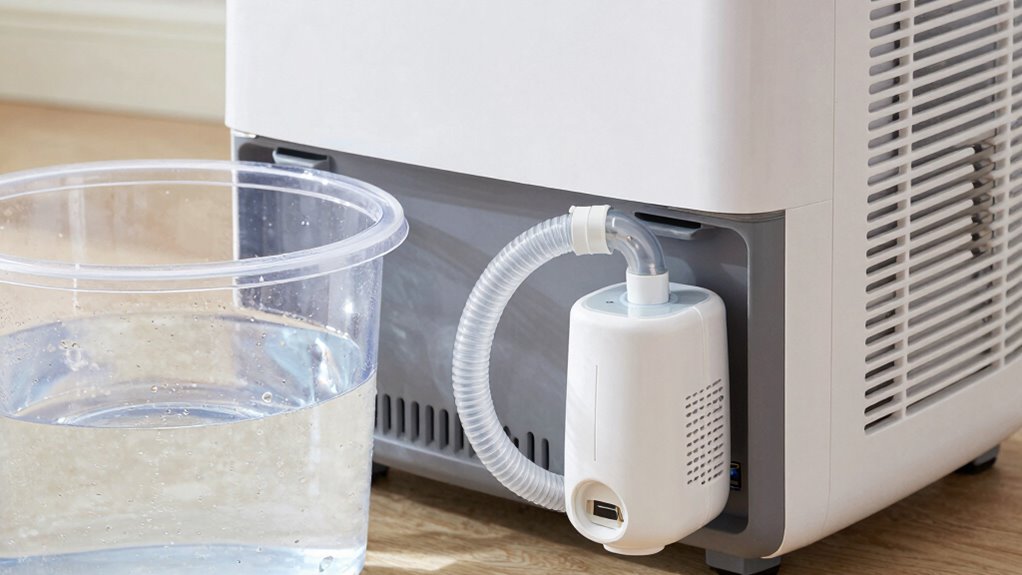
A pump-driven drain system becomes essential when your dehumidifier is located above the drain outlet or in an area where gravity-fed hoses can’t effectively remove water. This setup ensures continuous drainage without manual intervention. You should consider a pump system if your drain positioning makes gravity drainage impossible or impractical. It’s also useful if you want to prevent water from overflowing and triggering an automatic shutoff. Pump systems reliably move water to a designated drain, regardless of height or distance.
Use a pump-driven drain system to ensure continuous water removal from high or hard-to-reach dehumidifier locations.
- When the dehumidifier is placed on higher levels
- If gravity drainage isn’t feasible due to drain placement
- To maintain continuous operation without manual emptying
Comparing Costs, Maintenance, and Convenience of Drain Options
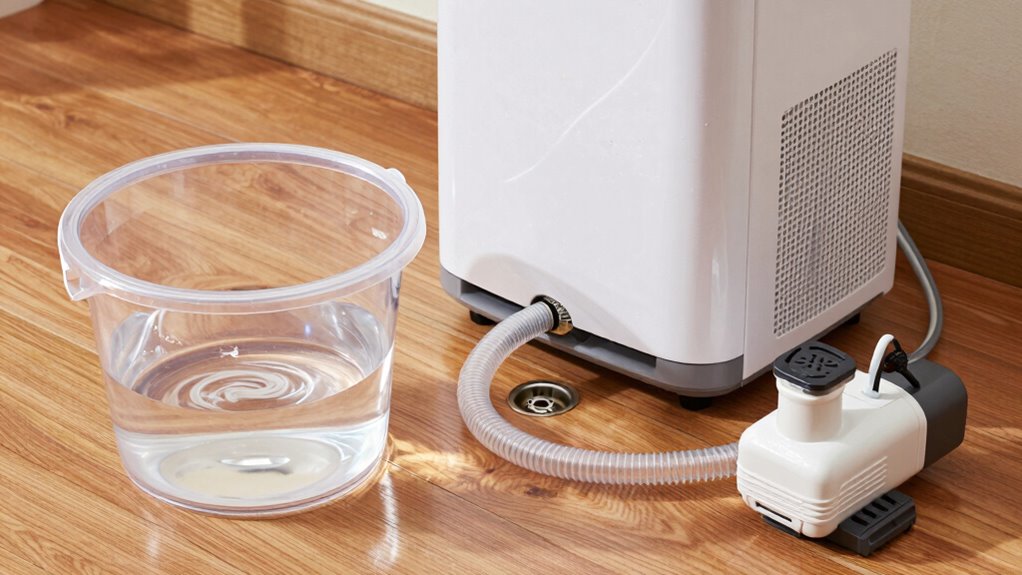
Choosing the right drain option involves weighing initial costs, ongoing maintenance, and convenience. Bucket drains are the most affordable upfront but require regular emptying and can be cumbersome. Hose drains are more convenient, allowing continuous drainage without frequent attention, but they depend on proper drain materials and proper setup to avoid leaks. Pumps offer the highest convenience, especially for hard-to-reach drains, but come with higher purchase and maintenance costs. When selecting, consider drainage regulations, which may restrict certain drain materials or installation methods. Regular maintenance varies; buckets need frequent emptying, hoses require inspection for clogs, and pumps need periodic checks. Overall, your choice depends on balancing budget, ease of use, and compliance with local drainage rules.
Troubleshooting Common Drainage Problems and Fixes
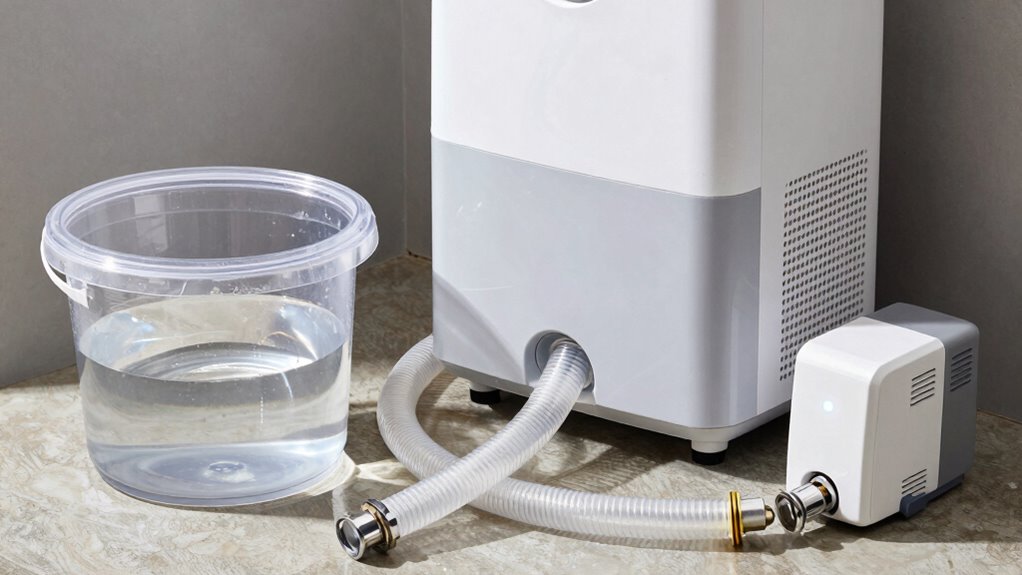
Even well-installed drainage systems can encounter issues that disrupt dehumidifier operation. Common problems include drainage blockages, leaks, and spills. To troubleshoot, start by inspecting the drain line for clogs caused by dirt or debris. Clear any obstructions and flush the line with water if needed. Check for leaks at connections or fittings—tighten or replace them if necessary. Spills may occur if the drain pan overflows or if the hose is improperly positioned; ensure the hose is secure and at the correct angle. Regular maintenance helps prevent these issues. Here are key troubleshooting steps:
Regularly inspect and clear drain lines to prevent leaks and spills in your dehumidifier.
- Clear drainage blockages regularly
- Tighten or replace leaking fittings
- Verify proper hose placement and secure connections
Tips for Installing Your Dehumidifier Drain System
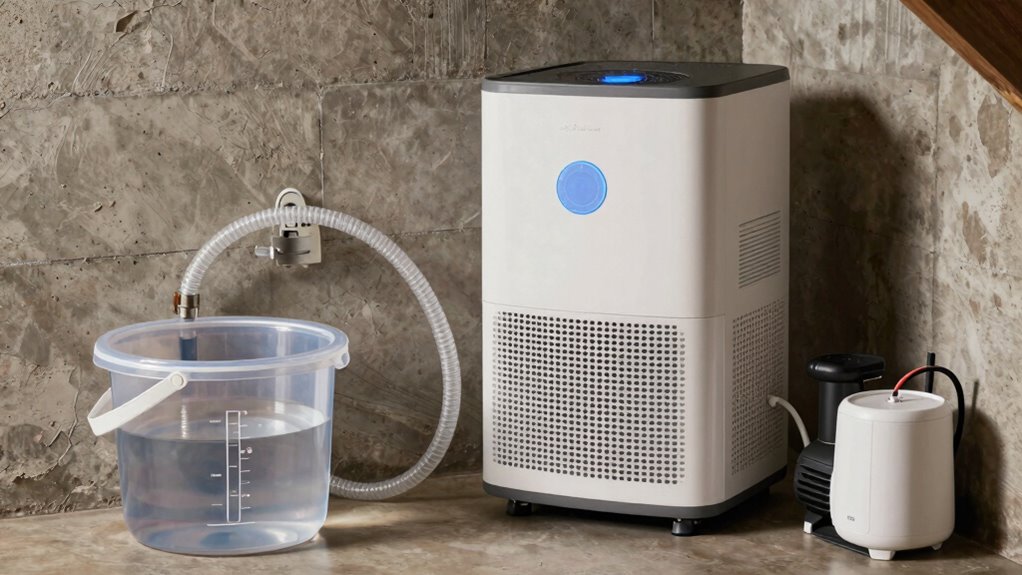
Proper installation of your dehumidifier drain system is essential for reliable operation and minimal maintenance. To guarantee effective drain installation, carefully choose placement strategies that promote proper gravity flow or pump operation. Position the drain hose or outlet lower than the dehumidifier’s drain port to prevent backups and leaks. Use sturdy brackets or supports to secure hoses and prevent kinks or bends that could hinder drainage. Avoid placing the drain line where it could be exposed to extreme temperatures or direct sunlight, which can cause damage or freezing. Check local building codes or manufacturer instructions for specific guidelines. Regularly inspect your drain setup for clogs or leaks, and keep the area clean to maintain maximum performance. Proper placement and secure installation will keep your dehumidifier running smoothly.
Which Drain Type Is Best for Your Home or Business?
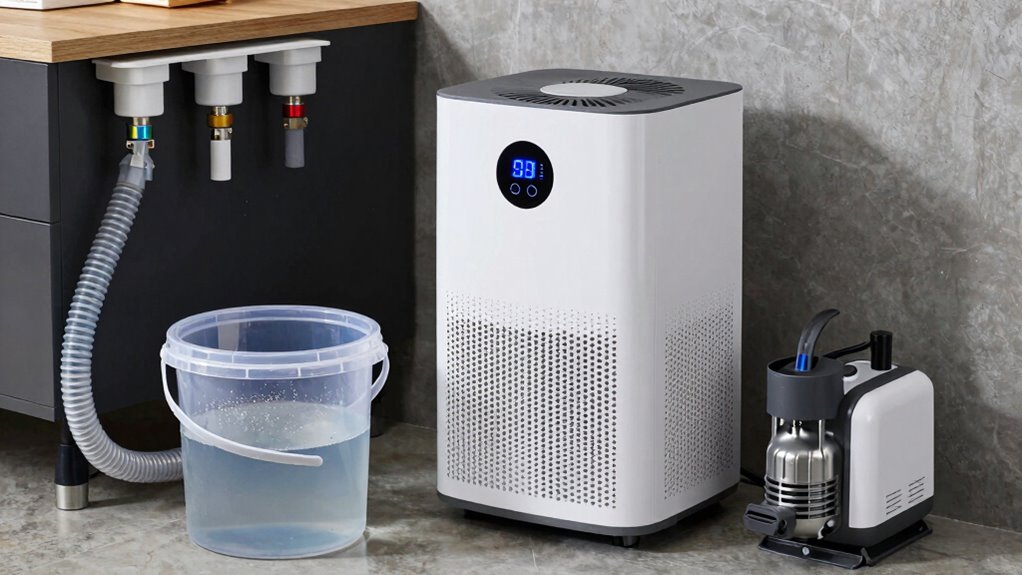
Determining the best drain type for your home or business depends on your specific needs and setup. Your dehumidifier size and humidity levels play a vital role in this decision. If you have a small dehumidifier with low humidity levels, a bucket might suffice, though it requires regular emptying. For larger units or higher humidity, a hose or pump offers continuous drainage, reducing maintenance. Consider the space available and your convenience:
- Bucket drain: Suitable for small units and low humidity, but requires frequent emptying.
- Hose drain: Ideal for moderate to large dehumidifiers, providing continuous drainage with minimal effort.
- Pump drain: Best for high humidity areas or hard-to-reach drain locations, ensuring consistent moisture removal.
Frequently Asked Questions
Can I Switch Between Different Drain Options Easily?
Yes, you can switch between different drain options easily, thanks to the drain switching feature many dehumidifiers offer. This provides installation flexibility, allowing you to change from a bucket to a hose or pump without hassle. Just make certain your model supports multiple drain methods, and follow the manufacturer’s instructions for a smooth transition. This way, you maintain convenience and adapt your setup as needed for different situations.
How Do I Prevent Mold Growth Around Drainage Areas?
To prevent mold growth around drainage areas, you should regularly perform drainage maintenance by cleaning the area and ensuring proper airflow. Keep the drainage area dry and use mold-resistant spray if needed. Always check for leaks or standing water, and promptly address any issues. Proper mold prevention involves maintaining a clean, dry environment and inspecting drainage systems frequently to avoid mold buildup and potential health risks.
Are There Safety Concerns With Electric Pump Installations?
Think of electric pump installation like wiring a delicate thread—if done improperly, it can pose electrical hazards. You should verify proper grounding, use waterproof connections, and follow manufacturer instructions. Regular pump maintenance is essential to prevent electrical issues or malfunctions. If you’re unsure, it’s best to consult a professional to avoid safety risks and ensure your dehumidifier operates safely and efficiently.
What Is the Typical Lifespan of Each Drain Type?
You can expect a bucket to last around 1-2 years with regular drain maintenance, but it requires regular emptying. Hoses often last 3-5 years, though installation challenges like securing the hose can impact longevity. Pumps generally last about 5-10 years, depending on usage and maintenance. Proper care and addressing installation issues help extend each drain type’s lifespan, ensuring your dehumidifier runs smoothly longer.
Do Drain Options Affect Dehumidifier Energy Efficiency?
Drain options do impact your dehumidifier’s energy efficiency. Using a continuous drain hose or pump reduces drain maintenance, preventing water overflow and minimizing energy consumption caused by frequent manual emptying. A bucket requires more upkeep and can lead to inefficient operation if it overflows or if you forget to empty it regularly. So, choosing an automatic drain system can save you energy and effort, keeping your dehumidifier running smoothly.
Conclusion
Choosing the right drain method can feel like deciding the fate of your entire home’s comfort—so don’t take it lightly. Whether you go bucket, hose, or pump, your choice impacts your daily life more than you realize. Make the wrong call, and you might be battling leaks, floods, or endless maintenance. Pick wisely, and you’ll open a hassle-free, perfectly dry space that keeps your home happy and your sanity intact!