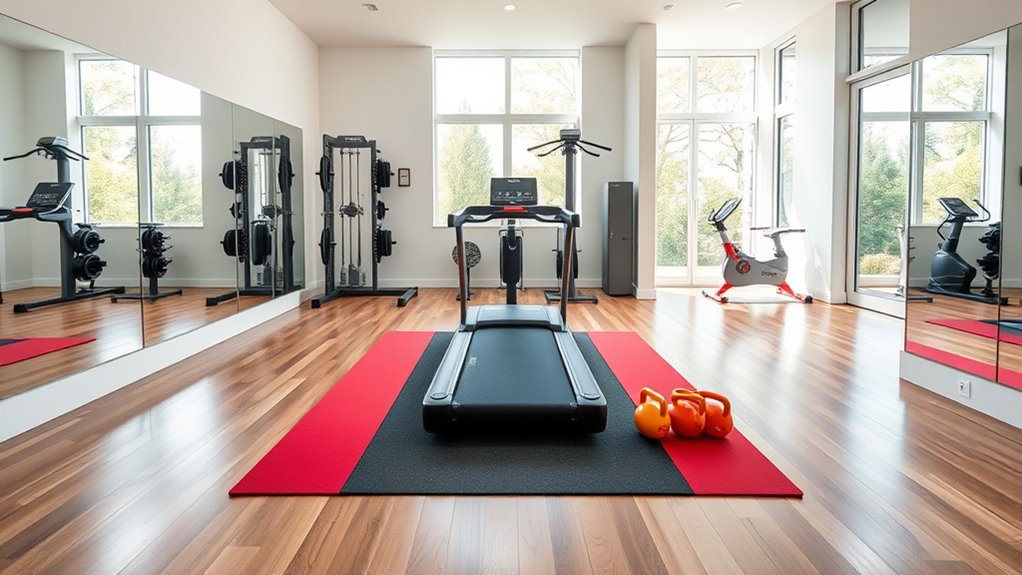

When designing your home gym, choose equipment based on your space, fitness goals, and motivation. Select versatile cardio options like treadmills, ellipticals, or bikes that fit your area and preference. For strength training, incorporate dumbbells, resistance bands, or multi-station machines, placing them near mirrors for proper form. Organize your layout to maximize space and create an inviting environment with good lighting and motivating touches. Keep reading to learn how to customize your layout for best workouts.
Key Takeaways
- Assess your available space and select compact, versatile equipment like dumbbells, resistance bands, or small cardio machines.
- Prioritize equipment based on your fitness goals, such as cardio for stamina or weights for strength.
- Arrange cardio machines along walls or corners to maximize open space and ensure safety.
- Place strength training gear near mirrors for proper form and use racks or shelves to keep small items organized.
- Personalize the environment with motivational elements, good lighting, and ventilation to create an inviting, motivating workout space.
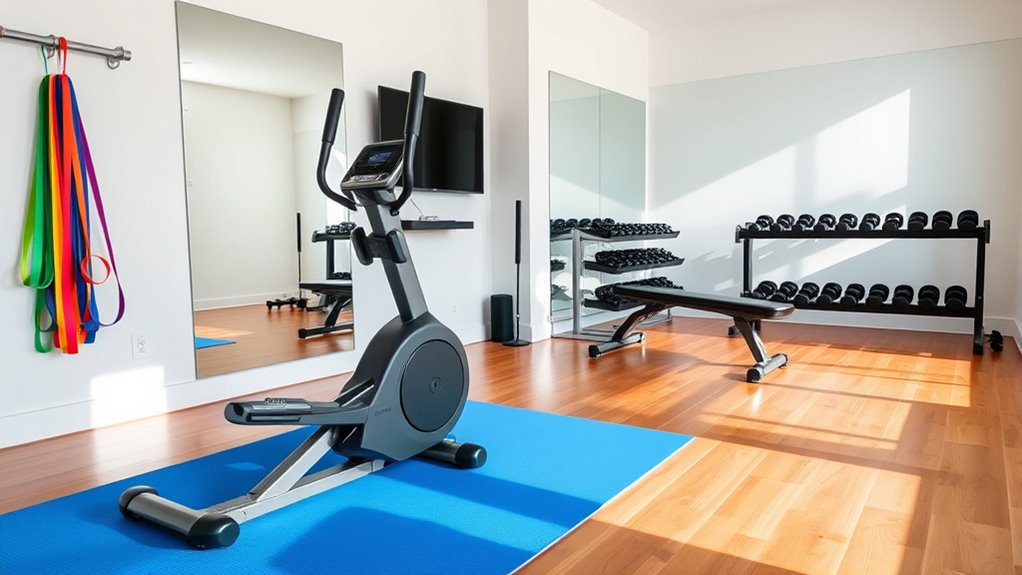
Are you ready to transform a corner of your home into a functional gym? If so, the first step is choosing the right equipment that suits your fitness goals and space. Cardio machines are a popular choice because they help improve cardiovascular health and stamina. Treadmills, ellipticals, and stationary bikes are versatile options that fit well into most home gyms. Think about your preferences—if you enjoy running, a treadmill might be your best pick. For low-impact workouts, an elliptical offers a smooth, joint-friendly experience. Bikes are excellent for quick cardio sessions and don’t take up much space. When selecting cardio equipment, consider your available area and how often you’ll use each machine. You want equipment that motivates you to stick with your routine without cluttering your space.
Transform a corner into a home gym with the right cardio equipment to suit your space and fitness goals.
Next, focus on strength training equipment. This area is essential for building muscle, improving endurance, and balancing your fitness regimen. Dumbbells, kettlebells, resistance bands, and adjustable weight machines give you a range of options for targeting different muscle groups. Dumbbells are incredibly versatile and don’t require much space, making them perfect for small gyms. Resistance bands are lightweight and portable, allowing for a variety of exercises without bulky equipment. If you have more room, investing in a power rack or a multi-station machine can provide extensive strength training options. Remember, strength training isn’t just about heavy lifting; it’s about creating a balanced routine that includes bodyweight exercises, free weights, and machines. Incorporating proper equipment can also help prevent injuries and improve workout efficiency.
Once you’ve selected your equipment, plan your layout carefully. Place cardio machines along one wall or in a corner where they won’t obstruct movement. Verify there’s enough space around each piece for safe and comfortable use. Position strength training gear so it’s easily accessible, ideally near a mirror for checking your form. Keep the area clutter-free by incorporating storage solutions like shelves or racks for smaller items like resistance bands and weights. Good lighting and ventilation also matter; they keep you energized and make your workouts more enjoyable.
Finally, personalize your home gym to make it inviting. Add a mirror, a sound system, or motivational artwork to create an inspiring atmosphere. The key is to design a space that’s functional yet welcoming, encouraging you to stay consistent with your fitness journey. By carefully choosing your equipment and planning your layout, you’ll create a home gym tailored to your needs that motivates you to reach your goals every day.
Frequently Asked Questions
How Much Space Do I Need for a Functional Home Gym?
You’ll need at least 150 to 200 square feet for a functional home gym, allowing space for essential equipment and movement. Consider storage solutions to keep the area organized and safe, and choose durable flooring options like rubber mats to protect your floors and reduce noise. Make sure there’s enough room for stretching, bodyweight exercises, and equipment access, so your workout remains effective and comfortable.
What Is the Most Versatile Equipment for Small Spaces?
Imagine you’ve got a tiny corner, yet you want a full workout. A multi-use machine is your best bet, combining cardio, strength, and flexibility options in one. For instance, a compact squat rack with fold-away features and adjustable weights maximizes space and versatility. This equipment allows you to perform various exercises without clutter, making it ideal for small spaces. With the right setup, you get an all-encompassing workout right at home.
How Do I Choose Equipment Suitable for Beginners?
To choose equipment suitable for beginners, focus on beginner-friendly options like resistance bands, dumbbells, and a stability ball. These tools support beginner workout routines and help build foundational strength safely. Start with versatile, easy-to-use equipment that allows for multiple exercises, making your workouts effective and enjoyable. Always prioritize comfort and safety, and gradually upgrade your gear as your fitness level improves.
What Safety Features Should I Consider in Gym Layout?
You should prioritize equipment safety by ensuring all machines are stable and well-maintained, reducing the risk of accidents. Keep emergency exits clear and unobstructed for quick evacuation if needed. Arrange your layout to prevent overcrowding, allowing enough space to move freely and avoid tripping hazards. Regularly check cords, weights, and safety features on equipment. Incorporating proper lighting and non-slip flooring also enhances overall safety in your gym.
How Can I Optimize Lighting and Ventilation in My Gym Area?
To optimize lighting and ventilation, maximize natural light by placing windows strategically and using light-colored walls to reflect it. Incorporate good air circulation with ceiling fans or portable fans, and consider an air purifier for fresh air. Keep windows open when possible, and use venting systems to maintain airflow. These steps create a bright, airy gym environment that keeps you comfortable and motivated during workouts.
Conclusion
Now, as you stand in your perfect home gym, imagine it as a sanctuary where every piece of equipment is a trusted ally in your fitness journey. With thoughtful choices and clever layout, you’ve created a space that empowers you to conquer your goals. Think of it as your personal arena, ready to ignite your passion and transform sweat into success. This is more than a gym — it’s your gateway to a stronger, healthier you.