To prevent your pergola kit from becoming a sail, make certain you use proper anchors suited to your soil type, like concrete footings or heavy-duty ground anchors. Always assess your soil stability and environmental factors, such as wind or frost heave, before installation. Follow manufacturer guidelines for secure attachment, and regularly inspect and reinforce your anchors over time. Keep these tips in mind, and you’ll find out more about creating a safe, durable pergola.
Key Takeaways
- Use heavy-duty anchors like concrete footings or earth augers suited to your soil type.
- Ensure proper soil assessment to choose the most stable anchoring method.
- Follow manufacturer instructions carefully for installation and tightening of all fasteners.
- Reinforce anchors with additional concrete or soil to improve stability against wind forces.
- Regularly inspect and maintain anchors to prevent loosening and ensure long-term stability.
Why Proper Anchoring Keeps Your Pergola Safe and Stable
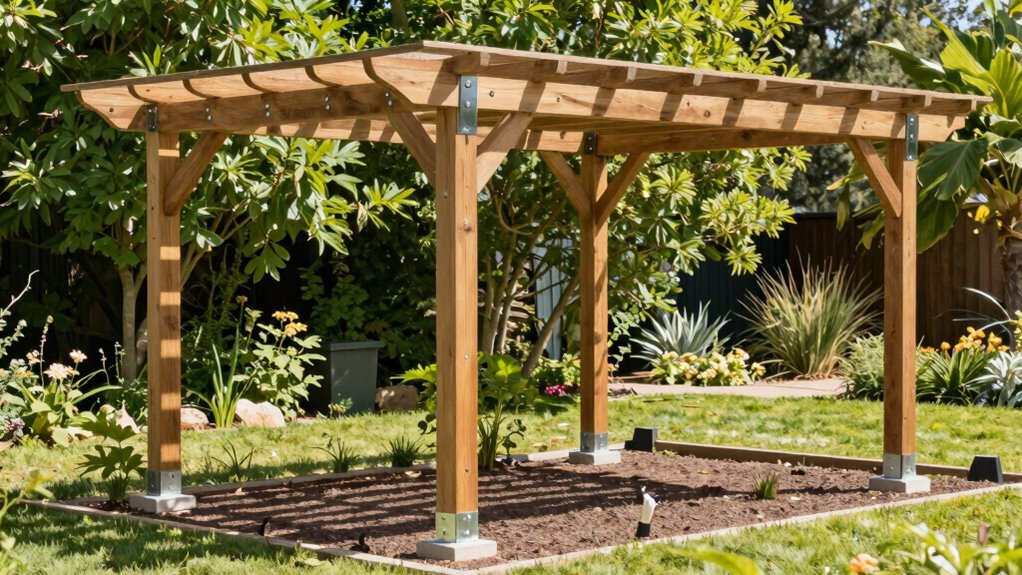
Proper anchoring is essential to guarantee your pergola remains safe and stable, especially in adverse weather conditions. When anchored correctly, your pergola gains better wind resistance, preventing it from shifting or toppling during strong gusts. This stability not only protects your structure but also preserves its aesthetic impact, ensuring it looks attractive and well-maintained over time. Without proper anchoring, high winds can cause damage or make your pergola appear unsteady, detracting from your outdoor space’s beauty. Effective anchoring methods, like concrete footings or heavy-duty anchors, provide a solid foundation that withstands weather challenges. Additionally, understanding weather-resistant design principles can further enhance your pergola’s durability. By prioritizing proper anchoring, you ensure your pergola remains a safe, stable, and visually appealing feature in your yard for years to come.
What to Consider Before Anchoring Your Pergola

Before you anchor your pergola, it’s important to take into account your soil type, as it affects the stability of your foundation. You should also check local building codes to ensure your installation complies with regulations. Additionally, make sure your pergola material is compatible with your chosen anchoring method for a secure setup. Understanding soil stability factors can further enhance your foundation’s durability, and selecting the appropriate anchoring system based on your environment is essential. Consulting local Hartsburg News reports can also provide insights into regional soil conditions and regulations. Knowing how soil composition impacts anchoring options can help prevent future stability issues.
Soil Type Considerations
Understanding your soil type is essential because it directly impacts how you anchor your pergola. Soil stability determines how well your anchors will hold over time, preventing shifting or sinking. For example, compacted clay offers good stability but poor drainage, which can lead to water pooling around your anchors. Sandy soils drain quickly but lack stability, requiring deeper or broader anchors for support. Loamy soils usually strike a balance, making them ideal for anchoring. Before installation, evaluate drainage considerations—poor drainage can weaken foundation stability and promote erosion. Knowing your soil type helps you choose the right anchoring methods, whether that’s concrete anchors, ground screws, or deeper footings, ensuring your pergola remains sturdy and secure for years to come. Additionally, soil composition can influence the choice of anchoring technique, highlighting the importance of thorough site assessment before installation. Properly assessing Soil stability ensures that your anchoring method is suitable for your specific site conditions, providing long-term support for your pergola. Conducting a soil test can provide valuable insights into these factors to inform your decision. Furthermore, understanding the soil moisture levels can help prevent issues related to water infiltration or erosion around the anchors.
Local Building Codes
Checking your local building codes is a vital step before anchoring your pergola because these regulations guarantee safety and compliance. You need to understand permit requirements and local zoning laws that might restrict pergola placement or size. Failing to adhere could result in fines or needing to modify your structure later. Be sure to consult your city or county building department for specific rules. Some areas require permits for pergolas over a certain size or height, while others restrict their location near property lines. Staying informed helps you avoid costly errors and guarantees your pergola is secure and legal. Additionally, understanding structural requirements can help ensure your pergola withstands local weather conditions and remains stable over time. It’s also helpful to consider perimeter anchoring methods to enhance stability in high winds. Properly integrating building code compliance from the start can save you time and money during installation. Incorporating local climate considerations into your anchoring plan can further improve its durability and safety.
Pergola Material Compatibility
Ensuring your pergola’s material is compatible with your anchoring method is essential for stability and longevity. Different pergola materials, such as wood, vinyl, or metal, have unique properties that influence how they should be anchored. Compatibility concerns include the strength and durability of the material, as well as how it responds to weather and soil conditions. For example, heavy wood may require more robust anchors, while lightweight vinyl needs gentler options to prevent damage. Always verify that your chosen anchoring method suits your pergola material to avoid issues like cracking, shifting, or sinking. Proper compatibility ensures your pergola remains secure, safe, and durable over time. Additionally, considering the cycling gear used to transport or install your pergola can help prevent damage during setup. Checking the material specifications beforehand can also assist in selecting the most suitable anchoring system for your specific pergola. Being aware of the material properties helps in choosing anchors that won’t compromise the structural integrity of your pergola. Conducting a material compatibility test prior to installation can further prevent potential issues.
How to Anchor Your Pergola Kit Step by Step
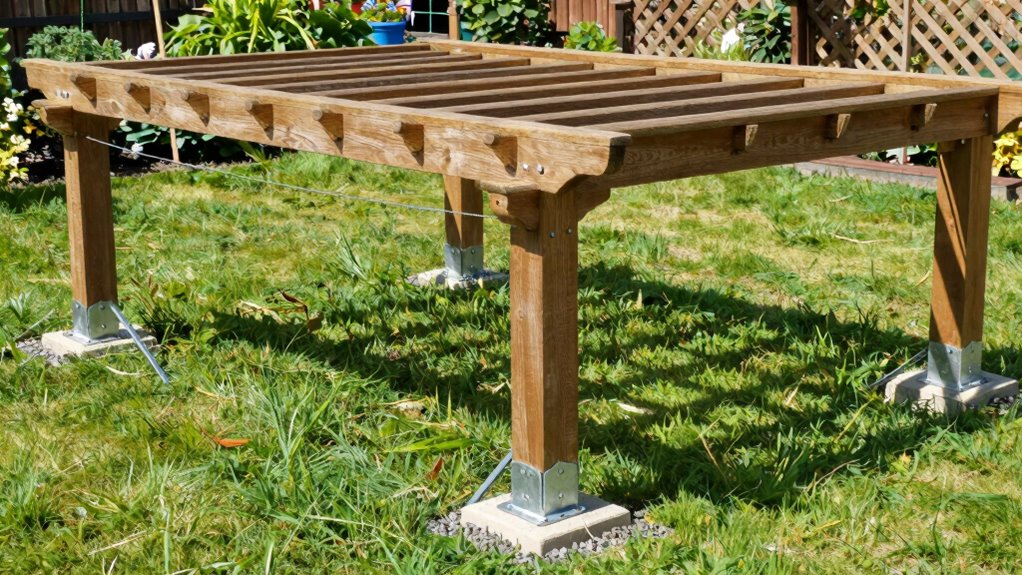
Anchoring your pergola kit securely is essential for stability and safety, and the process is straightforward if you follow the right steps. First, choose your anchoring method based on your soil type. Mark the spots where you’ll install the anchors, ensuring proper alignment. Dig holes or prepare surfaces accordingly. Secure the posts with concrete or ground anchors, making sure they’re level. Once anchored, add decorative accents to enhance aesthetics and consider seasonal adjustments like tightening or adding support during storms. Ensuring the correct anchoring technique is crucial for durability and safety. Proper anchoring also helps prevent the structure from becoming a sail in strong winds. Understanding the soil conditions is vital for selecting the most effective anchoring method. Here’s a simple guide:
| Step | Action | Tips |
|---|---|---|
| 1 | Mark anchor spots | Use string for accuracy |
| 2 | Prepare surface | Dig or level ground |
| 3 | Install anchors | Use concrete or ground anchors |
| 4 | Finalize & decorate | Add accents & check stability |
Best Anchoring Methods for Different Soil and Locations

Choosing the right anchoring method depends largely on your soil type and location. For firm, well-drained soil, traditional concrete anchors or ground screws work well. In softer or sandy soils, consider alternative anchoring methods like earth augers or helical anchors, which provide better stability. For locations with seasonal changes, you might need to adjust your anchoring approach to account for shifting soil or frost heave. Additionally, understanding the local environment can help you select the most durable anchoring solution for your pergola. Proper assessment of soil conditions is crucial for ensuring your structure remains secure over time, especially in areas prone to soil movement. Evaluating soil stability before installation can help prevent future shifting or settling of your pergola. Using appropriate anchoring techniques tailored to your specific soil conditions can significantly extend the lifespan of your pergola and prevent costly repairs. Incorporating proper installation techniques can further enhance the durability of your anchoring system.
Common Mistakes When Securing Your Pergola: And How to Avoid Them

One common mistake homeowners make when securing their pergola is underestimating the importance of proper anchoring techniques, which can lead to instability or even collapse over time. Poor anchoring not only jeopardizes safety but also affects your pergola aesthetics, making it look uneven or poorly supported. Using inadequate anchoring tools, such as weak stakes or incorrect fasteners, can cause the structure to shift or loosen. To avoid these issues, ensure you select the right anchoring tools for your soil type and follow manufacturer instructions carefully. Properly secured pergolas remain stable, safe, and visually appealing. Investing in quality anchors and taking the time to install them correctly will save you from costly repairs and preserve the integrity of your outdoor space. Additionally, understanding soil conditions and how they influence anchoring effectiveness can further improve your pergola’s stability.
Tips for Maintaining and Reinforcing Your Pergola Anchors Over Time

Over time, the forces of weather, soil movement, and regular use can weaken your pergola’s anchors, making it essential to inspect and reinforce them periodically. Regular checks help maintain the structure’s stability and preserve its aesthetic enhancements. To keep your pergola secure and attractive, consider these tips:
- Tighten loose bolts and fasteners to prevent wobbling and ensure the decorative features stay in place.
- Add extra concrete or soil around anchors for added stability and to protect against erosion.
- Reapply protective coatings or sealants to prevent rust and corrosion, maintaining the visual appeal of your pergola’s hardware.
Frequently Asked Questions
Can I Anchor My Pergola Without Professional Help?
Yes, you can anchor your pergola without professional help by following DIY projects and safety precautions. Start by choosing sturdy, appropriate anchors like concrete anchors or ground stakes, and make certain you have the right tools. Carefully read instructions and double-check measurements to secure the posts properly. Always wear safety gear, work on stable surfaces, and ask for help if needed to prevent accidents. Proper anchoring keeps your pergola safe and stable.
What Tools Are Needed for Anchoring a Pergola Kit?
Did you know that 60% of pergola failures are due to poor anchoring? To guarantee foundation stability and weatherproofing, you’ll need tools like a drill, concrete anchors, a level, and a measuring tape. A sturdy drill helps secure anchors tightly, while the level ensures proper alignment. Use the measuring tape for accurate placement, and don’t forget to check weatherproofing techniques to prevent damage from the elements.
How Long Does an Anchoring Installation Typically Take?
The installation timeline for anchoring a pergola kit usually takes about a day, depending on your experience and site conditions. Using effective anchoring techniques, like concrete footings or ground anchors, helps accelerate the process. You’ll need to set aside time for preparing the site, securing the anchors properly, and allowing any concrete to cure if necessary. With careful planning, you can complete the installation efficiently and ensure your pergola stays sturdy.
Are There Specific Anchors for High Wind Areas?
Yes, in high wind areas, you should use storm resistant anchors designed for strong wind load considerations. These anchors are specifically built to withstand intense gusts and prevent your pergola from becoming a sail. Always guarantee the anchors are rated for your area’s wind speeds, and follow manufacturer guidelines for installation. Properly anchoring with storm resistant options helps keep your pergola secure and your outdoor space safe.
How Often Should I Inspect and Re-Secure My Pergola Anchors?
You should inspect and re-secure your pergola anchors at least once every six months as part of your maintenance schedule. After severe weather, like storms or high winds, it’s essential to check for any loosened or shifted anchors. Regular inspections help identify potential issues early, ensuring your pergola remains stable and safe. Adjustments or re-securing may be necessary more often in weather-prone areas or during seasonal changes.
Conclusion
Imagine your pergola standing tall and sturdy, a steadfast guardian of your outdoor space. With proper anchoring, you prevent it from becoming a sail in the wind, ensuring safety and longevity. Think of your anchors as the roots of a mighty tree—firm and unyielding. Take the time to follow the right steps and avoid common mistakes. When you do, your pergola will remain a beautiful, stable retreat—ready to weather any storm that comes your way.