
To handle everyday fixes confidently, start with a well-stocked toolkit including a hammer, screwdrivers, pliers, a tape measure, a utility knife, and a level. Add a cordless drill, assorted nails and screws, a wrench, and safety gear like gloves and goggles. Keep these tools organized and maintained for quick, safe repairs. If you want to guarantee you’re fully prepared and protect your home effectively, there’s more valuable info to explore.
Key Takeaways
- A versatile screwdriver set with Phillips and flat-head tips for common fastening tasks.
- A sturdy hammer for assembling, adjusting, and removing nails or staples.
- Pliers (needle-nose and slip-joint) for gripping, twisting, and cutting wires or small objects.
- A adjustable wrench to loosen or tighten nuts and bolts of various sizes.
- A tape measure for accurate measurements during repairs and furniture setups.
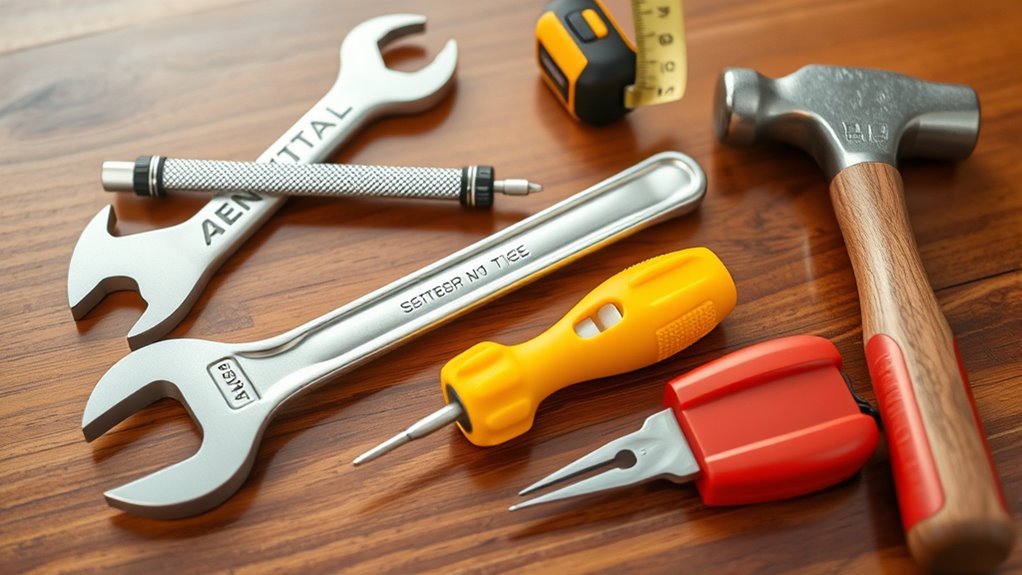
Having a well-stocked home tool kit is essential for handling everyday repairs and maintenance tasks efficiently. When you’re ready to tackle a quick fix or an unexpected problem, you want to ensure you have the right tools on hand to get the job done safely and effectively. But beyond having the tools, it’s just as important to understand DIY safety and proper tool maintenance. Taking these steps not only protects you but also prolongs the lifespan of your tools, saving you money and hassle in the long run.
A well-stocked toolkit and proper safety and maintenance ensure effective, safe, and long-lasting home repairs.
DIY safety should always be your top priority whenever you’re working with tools. Before starting any project, make sure you’re wearing appropriate safety gear, such as gloves, goggles, or a dust mask if necessary. Keep your workspace clear of clutter to avoid accidents, and never rush through a task—precision is key to preventing injuries. When using power tools, double-check that cords are in good condition and unplug them when not in use. If you’re unfamiliar with a tool, take the time to read the manual or watch a tutorial; understanding how a tool works reduces the risk of misuse. Remember, even simple tasks can turn dangerous if you’re not cautious, so always prioritize your safety first.
Tool maintenance is equally important for keeping your home toolkit in top shape. Regularly inspect your tools for signs of wear or damage—dull blades, loose handles, or frayed cords can compromise safety and effectiveness. Clean tools after each use to remove dust, debris, and residue, which can cause rust or corrosion over time. For hand tools like screwdrivers and pliers, keeping them dry and storing them in a dry place prevents rust and keeps them ready for use. Power tools benefit from occasional lubrication and blade sharpening, which ensures they operate smoothly and efficiently. Proper storage is also essential; use a toolbox or wall-mounted rack to keep tools organized and protected from damage. Additionally, understanding the importance of electric fire safety can help prevent electrical hazards during repairs. By maintaining your tools regularly, you extend their lifespan and ensure they perform reliably whenever you need them.
Incorporating these practices into your routine makes DIY projects safer and more efficient. When you understand safe handling procedures and maintain your tools properly, you minimize the risk of accidents and ensure your tools stay in good working condition. This approach not only boosts your confidence but also makes home repairs more manageable. Remember, a well-organized toolkit combined with a focus on safety and maintenance turns even the simplest repairs into successful, stress-free tasks. With these habits, you’re better equipped to handle everyday fixes swiftly, safely, and effectively.
Frequently Asked Questions
How Often Should I Replace My Home Tools?
You should replace your home tools when they show signs of wear, damage, or reduced effectiveness. Regular tool maintenance, like cleaning and sharpening, extends their longevity, but don’t ignore rust or broken handles. Typically, high-quality tools last years with proper care, while cheaper ones may need replacing sooner. Keep an eye on your tools to guarantee safety and efficiency, replacing them as needed to maintain ideal performance for everyday fixes.
What Safety Gear Is Recommended for DIY Repairs?
For DIY repairs, you should always wear personal protective equipment like safety goggles, gloves, and a dust mask. A safety checklist helps confirm you don’t forget essential gear before starting. Always inspect your safety gear for damage and replace it when necessary. Wearing the right safety gear minimizes risks, keeping you safe from debris, chemicals, and sharp objects during your repair projects.
Can I Use Household Items as Makeshift Tools?
You can use household item hacks as makeshift repair tools in a pinch. For example, a butter knife can work as a screwdriver, or a pair of pliers might be replaced with sturdy tongs. However, be cautious—makeshift repair tools may not be safe or effective for all tasks. Always prioritize safety and consider whether a proper tool might be a better, more reliable choice for your DIY projects.
Are There Eco-Friendly or Sustainable Tool Options Available?
Sure, eco-friendly tools are totally a thing now—because who wouldn’t want a biodegradable screwdriver or recycled material hammer? You can find these sustainable options that help the planet while fixing your home. No need to sacrifice performance for eco-consciousness. So go ahead, choose biodegradable tools and recycled material tools; your repairs will be greener, and you’ll feel good knowing you’re saving the Earth—one fix at a time.
How Do I Choose the Right Size Screwdriver for My Needs?
When choosing a screwdriver, pick the right size by matching it to the screw type and size. For example, use Phillips or flathead screwdrivers based on your needs. Consider the screwdriver types you have and select the one with the appropriate tip size and handle grip for comfort. Always test the fit before applying force to avoid stripping screws. Properly selecting a screwdriver guarantees efficient and safe fixes every time.
Conclusion
With these tools in your arsenal, you’re ready to conquer any household hiccup that comes your way. Think of your home as a ship—these essentials are your sturdy crew, ready to patch leaks or tighten loose sails at a moment’s notice. When surprises hit, you won’t be caught off guard; instead, you’ll be the captain steering through the storm. Keep your toolkit close, and your home will stay safe, sound, and smoothly sailing.