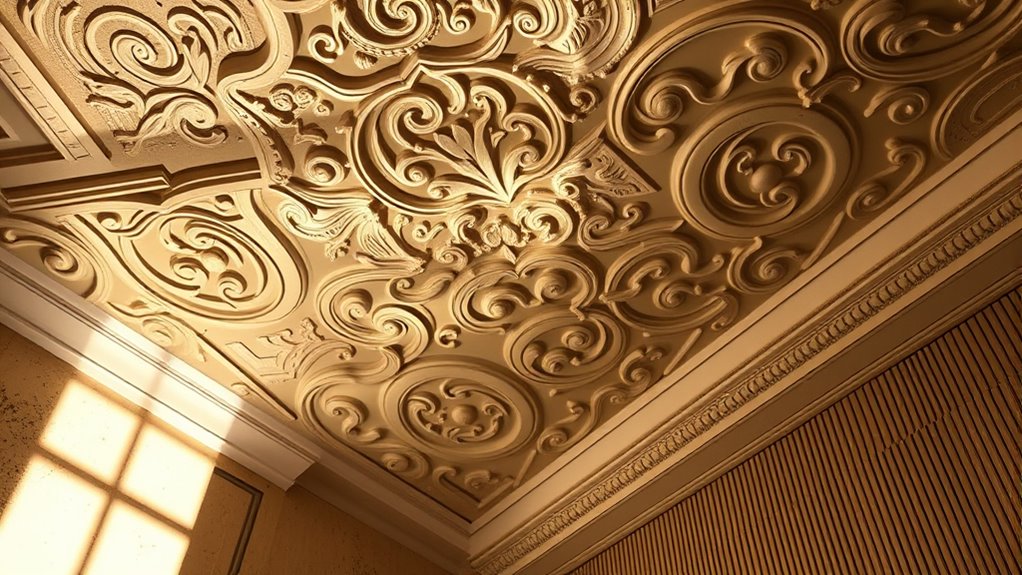

To add depth and character to your ceilings and walls, explore various textured techniques like spray-on finishes such as orange peel or splatter, or hand-applied styles like combing or dragging brushes. Combining textures or layering different finishes can create unique, dynamic looks. Choosing lighter textures brightens spaces, while darker ones add warmth and depth. Using the right tools and proper techniques guarantees professional results. To discover more tips and ideas, keep exploring these creative approaches.
Key Takeaways
- Utilize spray-on textures like orange peel or splatter for quick, uniform application that adds depth.
- Combine different textures or layer finishes to create dynamic, visually interesting walls and ceilings.
- Experiment with light-colored textures to brighten spaces or darker finishes for added depth and coziness.
- Use tools such as textured rollers, trowels, or spray guns for precise, professional results.
- Proper surface preparation and technique ensure durability and enhance the character of textured surfaces.

Textured ceilings and walls are popular choices for adding visual interest and hiding imperfections in your home. They create a sense of depth and character that flat surfaces often lack. When considering textures, it’s important to understand both their historical roots and how they’re used today. Historically, textures like popcorn, swirls, and knockdown finishes gained popularity in mid-20th-century homes, offering quick and affordable ways to conceal flaws while adding a subtle decorative element. These traditional textures served functional purposes, but they also reflected the design sensibilities of their time, emphasizing practicality over precision. Today, modern applications have evolved beyond these basic techniques, allowing for a broader range of styles and finishes that suit contemporary tastes. You can now choose from smooth, seamless textures, intricate patterns, or even customized designs that reflect your personality and interior style.
If you’re aiming to incorporate historical textures, you might consider replicating classic finishes such as Venetian plaster or stippling, which add an aged, sophisticated vibe to your space. These textures can be achieved through traditional methods or with modern tools that simplify the process. Modern applications, on the other hand, lean heavily on innovative materials and techniques. For example, spray-on textures like orange peel or splatter create a uniform look quickly, while hand-applied techniques like combing or dragging brushes produce unique patterns with a personal touch. You can also mix textures or combine different finishes to create a layered, dynamic look that adds depth and dimension. This flexibility means you’re not limited to a single style but can blend old and new to craft a space that feels both timeless and current.
When applying textures, it’s essential to consider the overall aesthetic of your room. Light-colored textures can brighten a space, while darker, more dramatic textures add depth and coziness. The choice of texture also influences how the light interacts with your walls and ceilings, emphasizing or softening details depending on your preferences. You’ll want to prepare your surfaces carefully, ensuring they’re smooth and free of dust or debris. Using the right tools—such as textured rollers, trowels, or spray guns—makes a big difference in achieving the desired effect. Whether you’re recreating a vintage look or experimenting with modern applications, proper technique will help you attain a professional finish that enhances your home’s character. Additionally, understanding the impact of texture ratios on visual depth can guide you in selecting the right finish for your space.
Ultimately, textures are a versatile way to personalize your living space. By understanding their history and exploring current trends, you can select finishes that not only hide imperfections but also reflect your aesthetic sensibilities. With a little practice and the right tools, textured ceilings and walls become an opportunity to add depth, interest, and a unique touch to your home’s interior.
Frequently Asked Questions
Can Textured Ceilings Improve Acoustics in a Room?
Yes, textured ceilings can improve acoustics in a room. By adding texture, you increase sound absorption, which helps reduce echoes and overall noise levels. This makes the space feel more comfortable and quieter, especially in large or open areas. You’ll notice better noise reduction, creating a more peaceful environment. So, if you want to enhance your room’s acoustics, textured ceilings are a practical and stylish solution.
Are Textured Walls Suitable for Humid Environments Like Bathrooms?
Yes, textured walls can suit humid environments like bathrooms if you choose moisture-resistant materials. You should consider surfaces that resist mold and mildew, and opt for textures that are easy to clean. Proper cleaning methods involve gentle scrubbing with mild solutions, avoiding abrasive tools that damage the texture. Moisture resistance is key, so select finishes designed for damp spaces to keep your walls looking fresh and flawless.
How Long Does It Take to Install Textured Ceilings and Walls?
The installation timeline for textured ceilings and walls typically takes a few days, depending on room size and complexity. You’ll start with drywall preparation, which involves priming and smoothing the surface. After that, applying the texture itself can take several hours, followed by drying time. Expect the entire process to span around 2 to 4 days, giving ample time for each step to guarantee a quality finish.
What Are the Maintenance Requirements for Textured Surfaces?
Ever wondered how to keep textured surfaces looking fresh? You should regularly follow cleaning routines using gentle dusting or vacuuming with a brush attachment. For stains or damage, repair techniques like light sanding or applying matching textured paint work best. While textured ceilings and walls require minimal maintenance, staying consistent prevents buildup and preserves their character. So, with proper care, your textured surfaces can stay beautiful for years to come.
Can You Customize Textures to Match Existing Décor?
Yes, you can customize textures to match your existing décor. With various customization options, you can choose from techniques like sponge, comb, or spray textures to blend seamlessly. By working with a professional, you guarantee the textures match your current walls or ceilings, maintaining a cohesive look. Matching techniques involve analyzing your décor’s style and selecting textures that complement or replicate the existing surface, creating a harmonious and personalized space.
Conclusion
Don’t let the fear of added maintenance hold you back from transforming your space. Textured ceilings and walls bring depth and character that truly make your home feel unique. Yes, they might require extra care, but the stunning visual impact and cozy ambiance are worth it. Imagine stepping into a room that feels warm, inviting, and uniquely yours—textures that tell your story. Embrace the change, and let your walls reflect your personality and style.