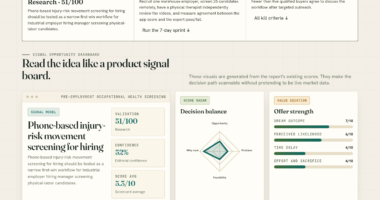
📊 Full opportunity report: Apple Wants Blacklisted Chinese RAM — and That Tells You How Bad the Squeeze Got on ThorstenMeyerAI.com — validation score, market gap, and execution plan.

Get the little things that make your day delivered free — and shop member deals
- Fast, free delivery on millions of items
- Access to Prime Big Deal Days deals on October 6–7
- Prime Video, Amazon Music and more included
TL;DR
Apple is requesting US government approval to purchase RAM from Chinese manufacturer CXMT, which is on the Pentagon’s blacklist. This move highlights the severity of the global memory shortage affecting major tech firms.
Apple is actively lobbying the US Commerce Department for approval to purchase memory chips from CXMT, a Chinese manufacturer on the Pentagon’s blacklist, in an effort to secure supply amid a severe memory shortage that has driven up costs and impacted production.
This development underscores the escalating pressure on supply chains and highlights the complex intersection of commercial needs and national security concerns.
According to six sources familiar with the matter, Apple approached the Commerce Department about a month ago and has since intensified its lobbying campaign across Washington. The company’s goal is to obtain assurances that a deal with CXMT, a Chinese memory chip maker, will not be later blocked by US trade restrictions, particularly the Entity List designation that would impose licensing constraints.
Importantly, Apple is not currently prohibited from buying from CXMT; rather, CXMT is on the Pentagon’s 1260H list of Chinese military companies, which makes any such procurement politically sensitive and potentially radioactive. The move is seen as a diversification effort, as Apple seeks alternative suppliers amid soaring memory prices caused by AI data demands.
Simultaneously, Apple announced substantial price hikes across its Mac and iPad lines, citing memory cost increases as a key factor. The timing suggests a strategic attempt to offset rising expenses through supply chain adjustments, including potential Chinese sourcing.
Apple wants blacklisted Chinese RAM
Two days after its first big price hikes, Apple is reportedly lobbying Washington to buy memory from a PLA-linked Chinese chipmaker. When the best-insulated company in tech runs out of road, the story isn’t Apple — it’s how total the squeeze got.
- +17–25% Mac & iPad price hikes, blamed on memory
- Memory prices ~4× in 3 quarters (Counterpoint)
- Cook: had no choice; “everything on the table”
- CXMT prices commodity RAM saner — no AI/HBM chase
- CXMT on Pentagon’s 1260H list (alleged PLA ties)
- Rep. Moolenaar: a “grave mistake” — deepens dependence
- Precedent: YMTC, 2022 — Congress warned, Apple backed off
- Reputational + political radioactivity for a US icon
DDR5 (PC/server), LPDDR5X/4X, RDIMM/MRDIMM. Demonstrated DDR5-8000; found under retail Corsair Vengeance kits; Dell & HP use it in region RAM. Open question: volume.
CXMT doesn’t make the stacked high-margin memory feeding AI accelerators — so Micron’s HBM franchise is untouched. This is a fight over cheap commodity RAM, not the AI-memory frontier.
Strip away the brand and this is what supply dependence under stress looks like: the richest hardware company on earth, unable to buy its way out, courting a supplier its own government flags as a military risk — and spending political capital to do it. It rhymes with the European bind — when you don’t control the supply, the shortage writes your policy. Approved or not, the CXMT gambit is a symptom, not a strategy. And the lesson for everyone else is blunt: if Apple can’t buy its way out, neither can you. What’s left is discipline.
Implications for US-China Tech Relations and Supply Chains
This effort by Apple signals how severe the current memory shortage has become, forcing even the most insulated companies to consider sourcing from Chinese firms linked to the military. If approved, the move could set a precedent for broader corporate engagement with Chinese suppliers on the US blacklist, complicating ongoing geopolitical tensions and trade policies.
It also raises questions about the balance between economic necessity and national security, especially as the US seeks to decouple its technology supply chains from China. The outcome could influence future restrictions and corporate sourcing strategies across the tech industry.
As an affiliate, we earn on qualifying purchases.
Memory Shortage and Rising Costs Drive Strategic Sourcing Changes
Over the past year, global memory chip prices have quadrupled due to AI-driven demand, straining supply chains for major manufacturers like Apple, Samsung, and Micron. Apple, which traditionally relies on long-term contracts with suppliers, has seen its costs escalate as wafer shortages and demand for high-speed DRAM increase.
While Apple has historically avoided Chinese memory suppliers due to political and security concerns, the recent price hikes have pushed the company to explore alternative sources. CXMT, a Chinese firm that produces commodity DRAM, has demonstrated recent advances in performance and capacity, making it a potential candidate for supply diversification.
Meanwhile, the US government has maintained restrictions on Chinese firms, with CXMT on the Pentagon’s blacklist but not on the Entity List, creating a legal gray area that Apple aims to navigate through lobbying efforts.
“Apple approached the Commerce Department roughly a month ago and has since widened its lobbying efforts across Washington to secure supply assurances.”
— a source familiar with the matter
Unclear Outcomes of US Approval and Future Restrictions
It is not yet clear whether the US Commerce Department will approve Apple’s request to buy from CXMT. The White House has not issued any official statement on the matter, and the political debate over national security versus supply chain resilience remains unresolved. Additionally, it is uncertain whether CXMT can meet Apple’s volume needs or if this move will be limited to small-scale procurement.
Next Steps in US Approval Process and Corporate Sourcing Strategies
Apple will continue lobbying efforts and await the US government’s decision. If approved, the company may proceed with limited procurement, potentially setting a precedent for other firms facing similar shortages. Meanwhile, congressional and White House debates over Chinese supply chain engagement are expected to intensify, influencing future policy directions.
Key Questions
Why is Apple interested in Chinese RAM now?
Apple faces a severe memory shortage and rising costs driven by AI demand, prompting it to seek alternative suppliers, including Chinese firms like CXMT, to diversify its supply chain and control expenses.
What legal or political hurdles does Apple face in sourcing from CXMT?
While CXMT is on the Pentagon’s blacklist of Chinese military companies, it is not on the Entity List. Approving such a purchase would involve navigating US national security concerns and political debates over dependence on Chinese supply chains.
Could this move affect US-China relations?
Yes, if the US approves procurement from CXMT, it could complicate diplomatic and trade relations, potentially prompting further restrictions or retaliatory measures from China.
Is CXMT capable of supplying Apple’s volume needs?
While CXMT has demonstrated advanced DDR5 modules, it remains uncertain whether it can meet Apple’s large-scale demand or if this would be a limited trial procurement.
What does this mean for the global memory market?
This development underscores the critical shortage and rising prices in the memory sector, possibly accelerating diversification efforts and geopolitical considerations in supply chain management.
Source: ThorstenMeyerAI.com
NFL season / tailgating Picks
team gear
As an affiliate, we earn on qualifying purchases.