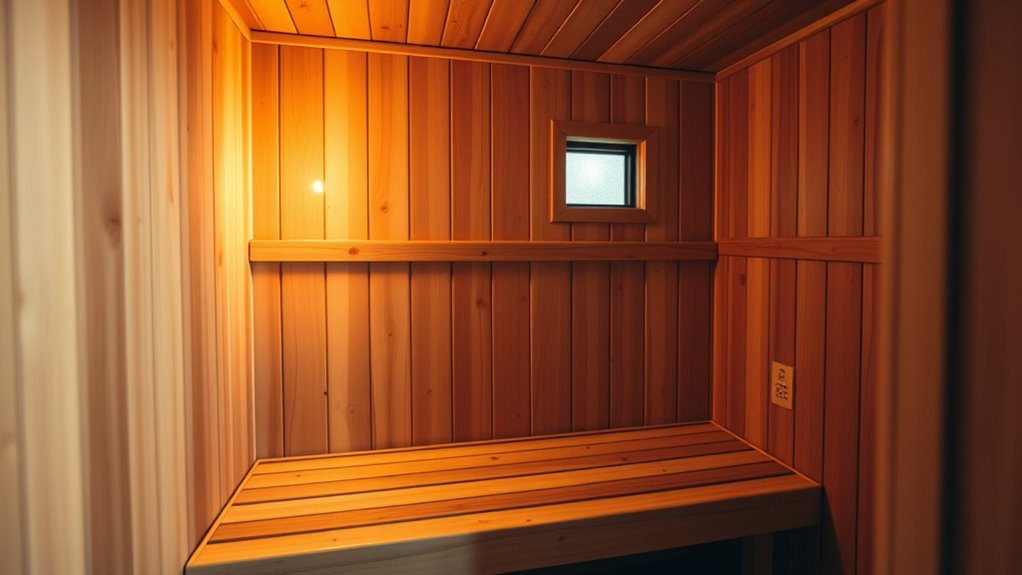

Building a DIY home sauna is a rewarding project that requires careful planning, proper insulation, ventilation, and electrical safety measures. Choose a well-ventilated, moisture-resistant space, follow local electrical codes, and install reliable heating elements. Regular maintenance and monitoring help guarantee safety and longevity. By prioritizing safety and following best practices, you can create a relaxing retreat tailored to your needs. Keep exploring for detailed tips on making your sauna safe, efficient, and enjoyable.
Key Takeaways
- Select a suitable, well-ventilated space following safety guidelines for location and insulation.
- Use proper electrical wiring and reliable heating elements, adhering to local codes for safety.
- Monitor temperature and humidity with gauges; set clear usage time and safety limits.
- Regularly inspect and maintain electrical components, heating elements, and interior surfaces for safety.
- Educate users on safe operation, proper cleaning, and routine inspections to ensure longevity and safety.

Creating your own home sauna is a rewarding project that can boost relaxation and wellness. As you start planning, one of your top priorities should be sauna safety. Ensuring your sauna is safe isn’t just about preventing accidents; it’s about creating a space where you can unwind without worry. First, choose a location that’s well-ventilated and away from flammable materials. Proper insulation and waterproofing help maintain consistent heat and prevent moisture damage, which is vital for safety and longevity. When installing electrical components, always follow local codes and hire a qualified electrician if needed. This guarantees safe wiring and prevents potential hazards like electrical shocks or fires. Incorporate a reliable thermometer and humidity gauge, so you can monitor conditions and avoid overheating or excessive moisture buildup. Remember, a safe sauna also involves educating everyone in your household about proper usage, especially children and those with health issues. Clear guidelines about time limits and temperature settings help prevent overheating and dehydration, making your sauna experience both enjoyable and safe. Additionally, selecting appropriate heating elements ensures efficient and safe operation for your custom sauna.
Maintaining your DIY sauna is equally important to keep it functioning properly and extend its lifespan. Regular sauna maintenance involves a few simple, yet essential tasks. After each session, wipe down surfaces to remove sweat and moisture, which can lead to mold or mildew if left unattended. Ventilation is key, so make sure the vents are clear and functioning properly to allow fresh air in and moisture out. Periodically check the heating elements or stove for signs of wear or malfunction, replacing parts as necessary. Keep the wooden benches and interior surfaces clean and dry, using gentle cleaners designed for sauna wood, to prevent deterioration and unpleasant odors. Inspect the door seals and hinges to ensure they’re tight and functional; loose seals can cause heat loss, making your sauna less efficient. Additionally, perform routine inspections of electrical connections and heating equipment to catch potential issues early. Proper sauna maintenance not only guarantees safety but also keeps your sauna operating efficiently, saving you money on repairs and energy costs over time. It’s a good idea to keep a log of maintenance tasks and repairs, so you can track the sauna’s condition and schedule preventive care.
Building your own home sauna is a fulfilling project, but it requires a focus on safety and maintenance to truly enjoy its benefits. By adhering to safety guidelines, you protect yourself and your family, creating a secure environment for relaxation. Regular upkeep guarantees your sauna remains a sanctuary of comfort and wellness for years to come. With proper care and attention, your DIY home sauna will become a cherished retreat where you can unwind and rejuvenate anytime you desire.
Frequently Asked Questions
What Are the Best Materials for Insulating a Home Sauna?
You should use rigid foam board or mineral wool insulation for your home sauna, as they offer excellent insulation types. These materials help maintain heat efficiently and resist moisture. Additionally, install thermal barriers like vapor barriers or foil-faced insulation to prevent heat loss and protect the wood. Combining these insulation types with thermal barriers guarantees your sauna stays warm and energy-efficient, creating a comfortable retreat for relaxation.
How Do I Ensure Proper Ventilation in My DIY Sauna?
To guarantee proper ventilation in your DIY sauna, focus on ventilation design and airflow optimization. Install intake vents near the floor and exhaust vents near the ceiling to promote effective air circulation. Use adjustable vents to control airflow, and position them to prevent drafts. Regularly check for obstructions and maintain a balanced airflow to keep the space comfortable, safe, and well-ventilated during each use.
What Safety Precautions Should I Take During Construction?
Prioritize safety by practicing proper precautions during construction. Protect yourself with personal protective equipment like gloves and goggles, and double-check electrical safety to prevent shocks. Keep fire prevention in mind by avoiding overloading circuits and using fire-resistant materials. Stay vigilant and follow safety standards, ensuring all wiring is correctly installed and insulation is secure. These steps safeguard your space, ensuring a safe, serene sauna sanctuary for years to come.
How Much Does It Typically Cost to Build a Home Sauna?
Building a home sauna typically costs between $3,000 and $8,000, depending on size, materials, and features. You’ll want to budget for sauna maintenance, like sealing and cleaning, and add sauna accessories such as benches, heaters, and lighting for comfort. Keep in mind, investing in quality materials can reduce upkeep costs over time, ensuring your relaxing retreat stays enjoyable and efficient for years to come.
Can I Install a DIY Sauna Outdoors Year-Round?
Yes, you can install a DIY sauna outdoors year-round, but you’ll need to take into account weatherproofing and insulation. Ensure proper sealing to maintain consistent sauna temperature and humidity, preventing drafts and moisture damage. Use durable materials suited for outdoor conditions, and consider adding a roof or cover for extra protection. Regular maintenance helps your outdoor sauna stay comfortable and safe, no matter the season.
Conclusion
Building your own home sauna might seem like a tall order, but with patience and a bit of elbow grease, you’re turning your space into a relaxing retreat. Remember, Rome wasn’t built in a day, so don’t rush the process. Once it’s done, you’ll have a cozy spot to unwind and melt away stress whenever you need. Trust the journey—you’re about to create a haven that’s worth every effort!