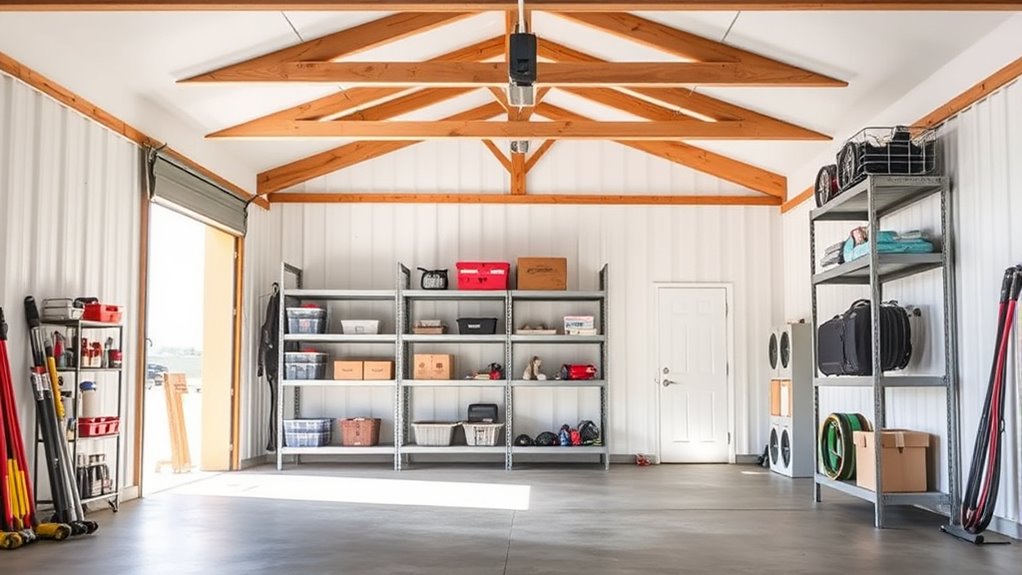

To retrofit your garage with insulation and storage solutions, start by sealing gaps and installing foam board or fiberglass batts on walls and ceilings to improve energy efficiency. Add sturdy shelving, clear bins, and ceiling racks to organize tools and belongings. Upgrade your garage door with insulation or a thermal blanket for extra comfort. Proper insulation and smart organization make your garage more functional and year-round livable—stay tuned for detailed tips to optimize your space further.
Key Takeaways
- Seal gaps and install proper insulation on walls, ceiling, and garage door to improve energy efficiency and comfort.
- Use foam board, fiberglass batts, or spray foam for effective insulation that fits snugly without gaps.
- Implement wall-mounted shelving, pegboards, and labeled bins to maximize storage and reduce clutter.
- Install ceiling racks and activity zones to organize bulky items and create dedicated work or storage areas.
- Incorporate climate control solutions like thermostats, fans, or ventilation to maintain a stable, comfortable garage environment.

A well-insulated garage can make a notable difference in comfort and energy efficiency, especially if you use the space year-round. Proper insulation helps keep the temperature stable, reducing the workload on your heating and cooling systems. When you focus on climate control, you prevent drafts and heat loss, making it easier to maintain a comfortable environment no matter the season. This is especially important if you spend a lot of time in your garage, whether for hobbies, workouts, or as a workshop. Insulation also cuts down on noise transfer, creating a quieter space inside.
Insulating your garage boosts comfort, reduces energy costs, and minimizes noise for year-round use.
To maximize these benefits, start by sealing gaps and cracks around doors, windows, and the garage door itself. Once the space is airtight, add insulation to the walls and ceiling. Foam board, fiberglass batts, or spray foam are popular options, each offering different levels of R-value and ease of installation. When installing insulation, ensure it fits snugly without gaps, as missing spots can undermine your climate control efforts. Don’t forget to insulate the garage door, which is often overlooked but can be a major source of heat loss. Installing an insulated garage door or adding a thermal blanket can greatly improve energy efficiency.
Organization tips go hand-in-hand with creating a functional, comfortable garage. Use wall-mounted shelving and pegboards to keep tools and supplies off the floor, making your space feel more open and easier to tidy. Clear storage bins with labels help you find items quickly and prevent clutter from piling up. Consider installing ceiling racks for bulky items like seasonal decorations or sports gear, freeing up valuable floor space. When organizing, think about zones for different activities—work area, storage, laundry—so everything has a designated spot. This not only improves safety but also makes climate control more effective because you’re not battling clutter that traps heat or cold.
Additionally, integrating climate control solutions like thermostats, space heaters, or fans can enhance comfort. A programmable thermostat allows you to set temperatures based on your schedule, saving energy when the garage isn’t in use. Ventilation is also key; proper airflow prevents excess humidity and mold, especially if you use the space year-round. Incorporating ventilation strategies can significantly improve indoor air quality and prevent moisture buildup. With good insulation, thoughtful organization tips, and climate control measures, your garage becomes a more inviting, efficient space. You’ll find it easier to keep everything organized, preserve your belongings, and enjoy your garage regardless of the weather outside.
Frequently Asked Questions
How Much Does Garage Insulation Typically Cost?
Garage insulation typically costs between $1,500 and $3,500, depending on your garage’s size and the insulation types you choose. A thorough cost analysis helps you decide whether fiberglass, spray foam, or rigid foam is best for your needs. Keep in mind that higher-quality insulation offers better energy efficiency but may come with a higher upfront cost. You can save long-term by selecting the right insulation type for your climate and budget.
Can I Install Insulation Myself or Hire a Professional?
Did you know that DIY insulation projects can save you up to 30%? You can definitely install insulation yourself if you’re comfortable with basic tools and safety precautions. However, for best results and to avoid mistakes, hiring professional services might be worth the investment. Consider your skill level and project complexity before deciding—if you’re unsure, professionals can guarantee proper installation and energy efficiency.
What Are the Best Storage Solutions for Small Garages?
You should choose space-saving storage solutions like wall-mounted racks, pegboards, and shelves to maximize your small garage. These options keep your garage organized and free up floor space, making it easier to find what you need. Consider adding stackable bins or ceiling-mounted storage for seasonal items. With smart garage organization, you’ll optimize space, stay tidy, and make your garage more functional and accessible every day.
How Do I Prevent Mold and Moisture in Insulated Garages?
Forget about turning your garage into a mold museum. To prevent mold and moisture, you should install moisture barriers behind insulation and guarantee proper ventilation. Use dehumidifiers if needed, and regularly check for leaks or condensation. Keep your garage dry and well-ventilated, because nobody wants mold crashing their DIY projects or turning your storage space into a fungal paradise. Stay dry, stay mold-free!
Are There Eco-Friendly Insulation Options Available?
Yes, eco-friendly insulation options are available. You can choose recycled insulation made from recovered materials, reducing waste and environmental impact. Biodegradable materials, like cellulose made from recycled paper or natural fibers such as cotton or wool, also offer sustainable choices. These options help you insulate your garage effectively while minimizing your ecological footprint, making your space greener and healthier.
Conclusion
By upgrading your garage with insulation and smart storage, you’re transforming it from a cluttered, cold space into a warm, organized retreat. Imagine your garage as a garden—you nurture it with the right tools and care, and it blossoms into a functional haven. Just like tending to a garden, taking these steps now pays off in comfort and efficiency later. Start small, stay consistent, and watch your garage thrive beyond your expectations.